Abstract
Background
The western Amazon is the most biologically rich part of the Amazon basin and is home to a great diversity of indigenous ethnic groups, including some of the world’s last uncontacted peoples living in voluntary isolation. Unlike the eastern Brazilian Amazon, it is still a largely intact ecosystem. Underlying this landscape are large reserves of oil and gas, many yet untapped. The growing global demand is leading to unprecedented exploration and development in the region.
Methodology/Principal Findings
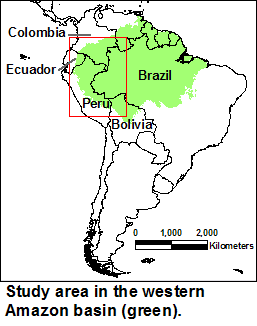
We synthesized information from government sources to quantify the status of oil development in the western Amazon. National governments delimit specific geographic areas or “blocks” that are zoned for hydrocarbon activities, which they may lease to state and multinational energy companies for exploration and production. About 180 oil and gas blocks now cover ~688,000 km2 of the western Amazon. These blocks overlap the most species-rich part of the Amazon. We also found that many of the blocks overlap indigenous territories, both titled lands and areas utilized by people s in voluntary isolation. In Ecuador and Peru, oil and gas blocks now cover more than two-thirds of the Amazon. In Bolivia and western Brazil, major exploration activities are set to increase rapidly.
Conclusions/Significance
Without improved policies, the increasing scope and magnitude of planned extraction means that environmental and social impacts are likely to intensify. We review the most pressing oil- and gas related conservation policy issues confronting the region. These include the need for regional Strategic Environmental Impact Assessments and the adoption of roadless extraction techniques. We also consider the conflicts where the blocks overlap indigenous peoples’ territories.
|
Resumen
Antecedent
Amazonía Occidental es la parte más rica biológicamente y virgen de la Cuenca Amazónica y es el hogar de una gran variedad de grupos étnicos indígenas, incluyendo algunos de los últimos grupos en el mundo que viven en aislamiento voluntario. A diferencia de la Amazonía Brasileña oriental, la parte occidental es aun un gran ecosistema virgen. Subyacente a este paraje se encuentran grandes reservas de petróleo y gas, muchas de las cuales están aun sin explotar. La creciente demanda de hidrocarburos a nivel mundial está llevando a esta región a una exploración y explotación sin precedentes.
Metodología y Principales Hallazgos
Se sintetizó la información obtenida de fuentes gubernamentales para cuantificar el estatus del desarrollo petrolero en la Amazonía occidental. Los gobiernos nacionales delimitan geográficamente áreas específicas o “bloques” que están divididos en zonas para llevar a cabo las actividades hidrocarburíferas, estos bloques pueden ser concesionados al estado y a las compañías energéticas multinacionales para la exploración y producción. Cerca de 180 bloques petroleros y gasíferos cubren actualmente aproximadamente 688,000 km2 del este de la Amazonía. Estos bloques están se sobreponen sobre la parte más rica en especies de la Amazonía. Además, encontramos que muchos de estos bloques están sobre territorios indígenas que contienen tanto tierras tituladas como áreas usadas por los pueblos en aislamiento voluntario. En la actualidad en Ecuador y Perú, los bloques petroleros y gasíferos cubren más de las dos terceras partes de la Amazonía. En Bolivia y el oeste del Brasil, la mayor parte de las actividades de exploración se están incrementando rápidamente.
Conclusiones/Relevancia
Sin una mejora de las políticas, el alcance y la creciente magnitud de la extracción planeada indican que los impactos ambientales y sociales probablemente se intensificarán. Aquí se revisan los asuntos de política más apremiantes que confronta la región sobre conservación los cuales se relacionan al petróleo y al gas. Estos incluyen la necesidad de Evaluaciones Estratégicas de Impacto Ambiental regional y la adopción de técnicas para la extracción de hidrocarburos sin construir carreteras. También se consideran los conflictos donde los bloques traslapan los territorios indígenas.
|
|
For More Information, Contact:
Save America's Forests
202-544-9219
Save America's Forests
Yasuní Rainforest Campaign |
|